If you’re a Singaporean woman marrying a foreigner, you’ll need to attend an in-person appointment at the Registry of Muslim Marriages (ROMM). If the couple are both Singaporean, this can be done online. I recently went through this process as a Singaporean lady marrying a Malaysian gentleman, in Singapore, and I’m sharing my experience here in case someone finds it useful. Please note that your experience may differ from mine depending on your personal circumstances, so do your own due diligence as well and always refer to the official ROMM website and staff for guidance.
Getting There
At time of writing – December 2025 – ROMM is temporary located at Esplanade Mall, 3rd Floor. If you’re taking a taxi, get dropped off at the taxi stand, walk through the entrance and take the lift on the right hand side to get to the 3rd floor. You can take the escalators up too.
How much time to allow for the appt? We were advised by our Naib Kadi to allow loads of time, as if going for a polyclinic appt ie it may take a lot of waiting and patience. Our appointment ended about 1h 10 mins after our start time which was fairly efficient; we did not feel like we had to wait for so long in between the different parties we met. We booked a weekday morning timeslot.
Documents to Bring
Before you go, make sure you have all your documentation ready. Here’s what you may need, whichever is applicable for you and depending on how kiasu you are:
- Your IC/identification
- Your fiance’s passport
- Both your birth certs
- Wali’s IC
- Approval letter from fiance’s country
- Single status letter from fiance’s country
- Marriage course/s completion certificates eg Cinta Abadi *
- Divorce papers and previous marriage certs (if applicable)
- Death certs for father and/or former spouse (if applicable)
- Receipt of mas kahwin to prove its value meets min requirements
Before the appointment, I also scanned and uploaded some essential documents onto the ROMM OMJ (Our Marriage Journey) portal already.
For women specifically:
- Parents’ marriage records (from what I learnt recently, this is important because in Islam, lineage matters; they want to verify you were born more than 9 months after your parents’ marriage, the implication being that you were conceived within a legitimate marriage, to ensure that your father is able to be your wali)
- If you can’t find this certificate (unfortunately my late parents’ cert was lost, they’d married in the 1960s and I recall their cert was in Jawi on blue paper), they may be able to search their records by name, or use other means to deduce, such as older siblings’ birth and marriage records
- If your father has passed away, bring his death certificate and/or request a certified extract copy from ICA for a fee. During the OMJ online application process you would have been asked what your relationship to your ‘replacement’ wali is, whether it’s your grandfather, brother, wali hakim, etc.
If marrying a Malaysian, Indonesian, or Bruneian:
- Permission (surat kebenaran) letter to marry – this is very, very important
- Include all the forms (borang) that were part of your fiancé’s application, including wet signatures from religious authorities, HIV tests, etc.
- Single status letter from their home country, issued within the past 90 days of your ROMM appointment (we were worried because fiance realised just the night before that it was issued about 100 days prior, but we still got through, they didn’t call it out, maybe because 3 months roughly is acceptable, or we were lucky, not sure!)
The Process: Step by Step
1. Reception
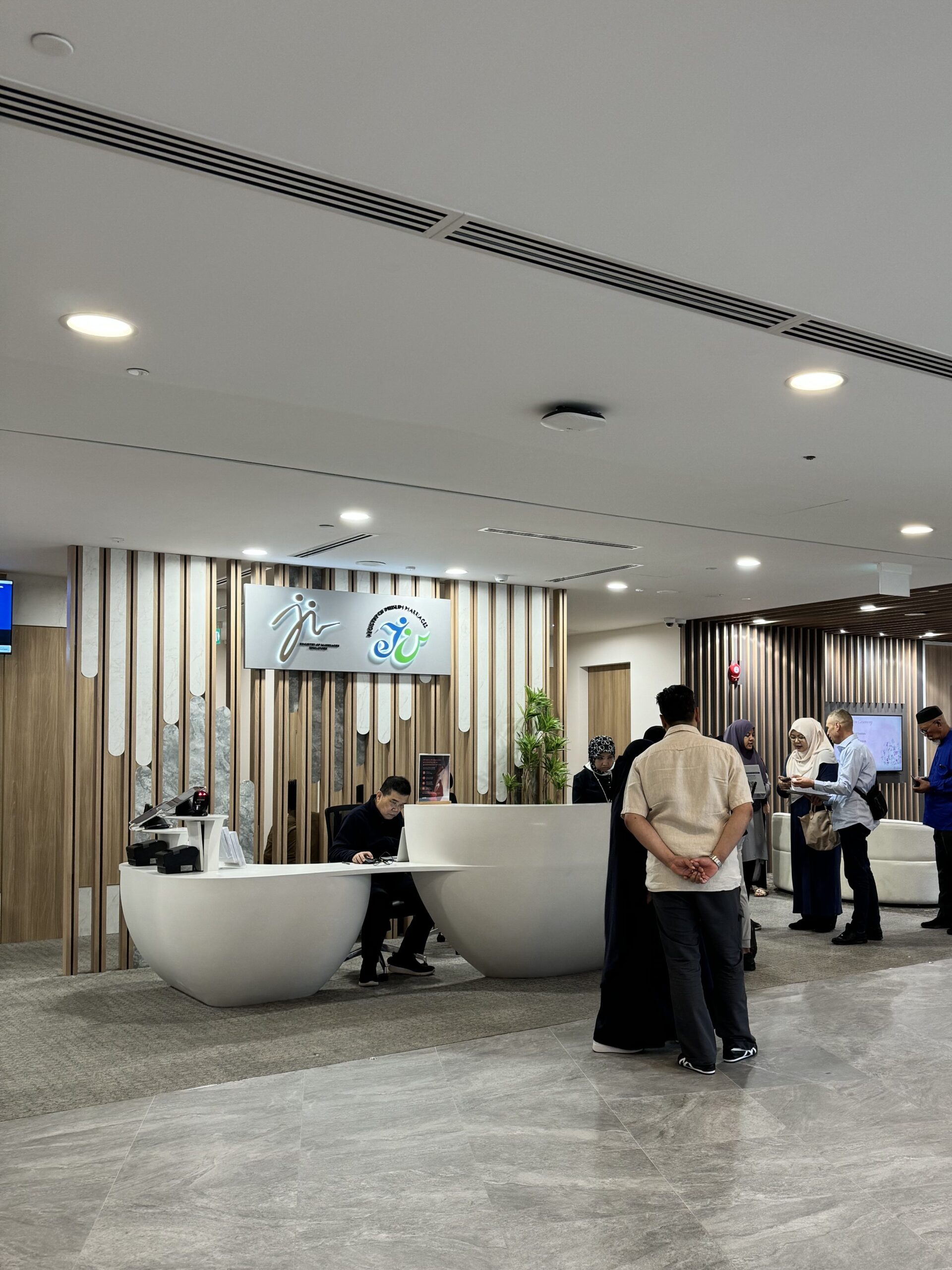
Go to the reception area. They’ll immediately ask for your IC, partner’s passport, wali’s IC, approval letter from your partner’s country, divorce papers if applicable, etc. They put all these documents in a folder and you keep hold of it for the next step.
2. Getting Your Queue Number
Scan the QR the receptionist will show you to get your queue number. You’ll receive a series of text messages:
- Confirming you’re in the queue and how many people are ahead of you
- Notifying you when your number is coming up soon
- Alerting you when your queue number is being called
3. Waiting Area
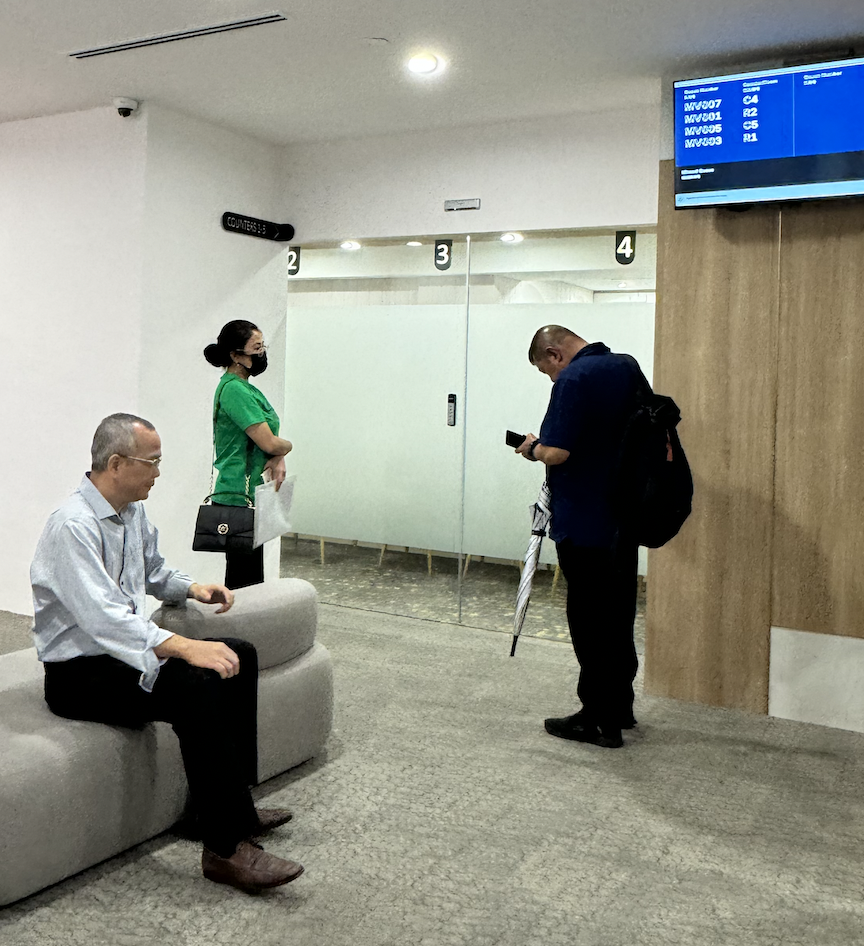
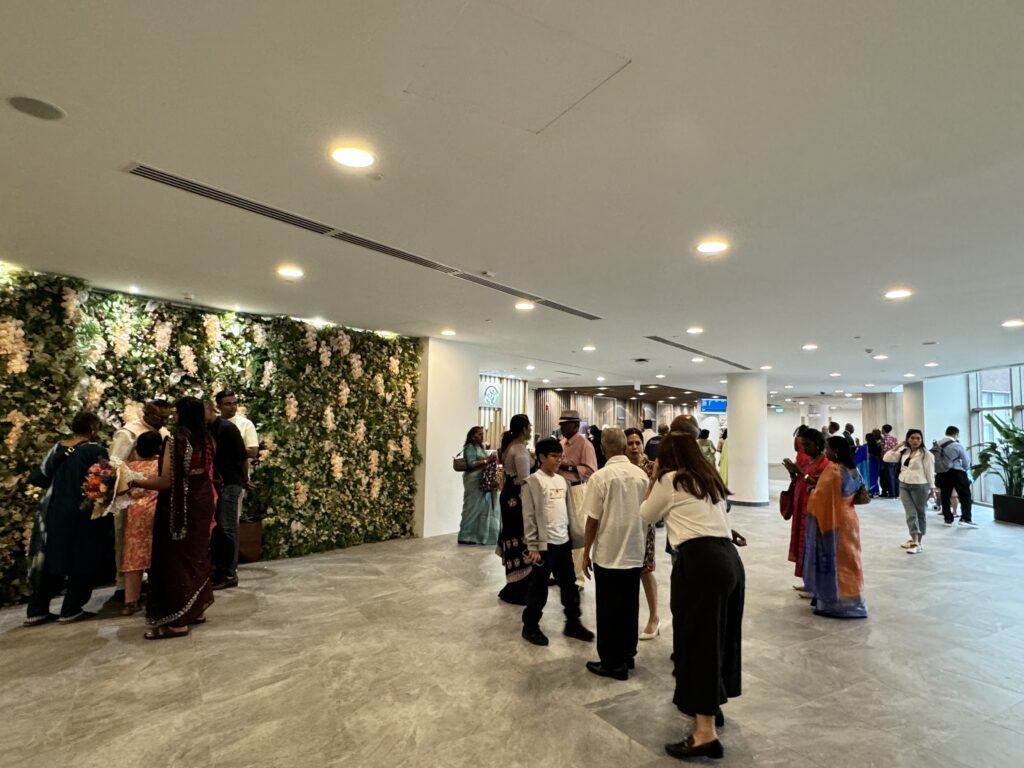
Wait in the designated area to be called to the counters. The counters handle both ROM and ROMM cases. Look at the screen and wait for your number to be called. If you pop over to the nearby café just in front, keep an eye on your SMS notifications. The toilet is just round the corner from where all the newlyweds take photos with the flower/greenery background, and there is a water cooler available as well.
4. Counter Session
When your number is called, enter through the glass doors to go to the counter. They’ll ask for further documentation and questions, looking through papers more thoroughly.
For women, they asked about parental marriage records (as explained earlier about lineage verification). If you’re marrying a Malaysian, Indonesian, or Bruneian, make sure you have that permission letter and all supporting forms.
After the counter, they handed the file with documents back to me, and was asked to pass it to my wali.
5. Meeting with the Kadi
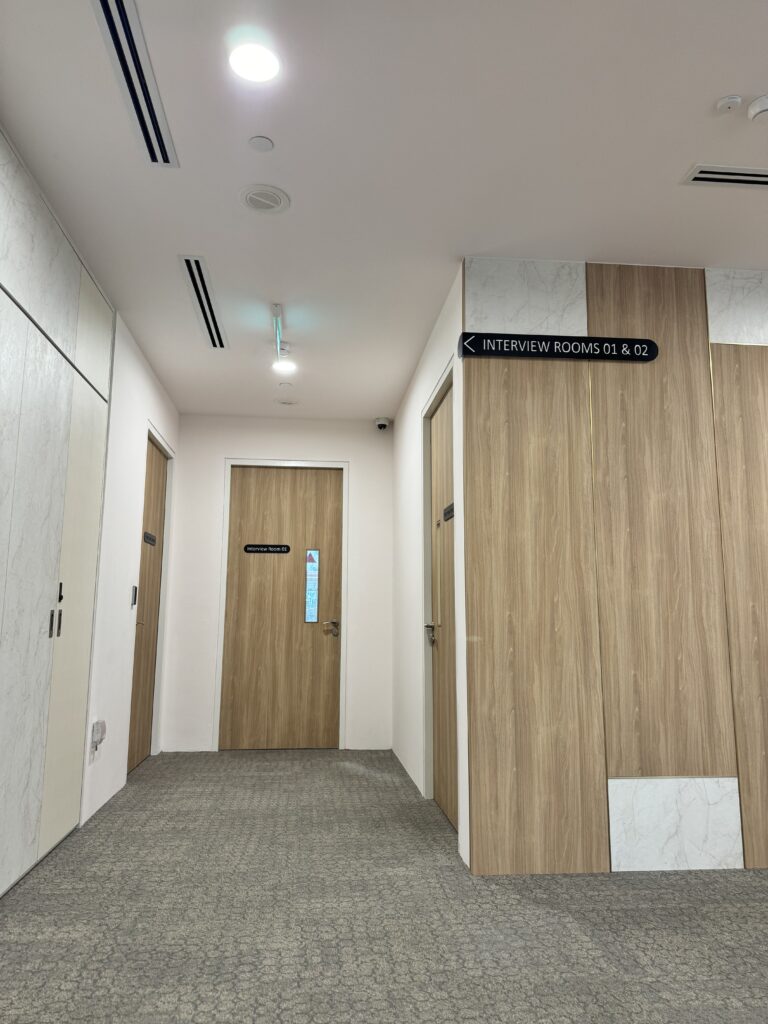
The next step is meeting the official Kadi on duty stationed at ROMM to complete sign off and paperwork so you can proceed with your planned nikah ceremony.
Wali goes in first. The Kadi may ask him a few questions, then he has to angkat sumpah (take an oath) and sign the official form on screen.
Then it’s the couple’s turn. In my case, the Kadi requested time alone with me first because he had questions about my first marriage, which was done overseas. After he was satisfied with my answers, he stamped and signed my foreign decree absolute, declaring it had been ‘used’ for this marriage so I cannot use those papers to prove my ‘single’ status again.
Then my fiancé was called in and joined me. The Kadi examined our application form and documentation, asked a few questions as he was looking through everything: our documentations, location and time of our nikah, our Naib Kadi’s info, and asked us to confirm that we had not been forced into marrying each other.
We had also printed out our Cinta Abadi (Singapore) course certificate and the course certificate we did in Malaysia*. We brought our mas kahwin receipt just in case he needed proof of the value.
Then my fiancé was asked to put his hand up under oath and read after the Kadi. The Kadi asked if we wanted to do this in English or Malay (we chose Malay), reading out the stipulations outlined in the form. Following that, fiance signed it digitally. I then did the same thing. The full application form is on the Kadi’s screen and the signature is captured on a connected external pad with a stylus, similar to what’s used in banks.
With that, the process is complete!
What They’re Actually Checking
The overall principle is straightforward: they want to ensure you are who you say you are, your documentation is in order, and that you have not been forced into marriage.
They did not grill us or ask personal questions like why we’re getting married, our occupations, or immigration-related questions, but they might do so if they sense something is amiss. If your essential documentation is in order, there’s nothing to worry about.
*As an aside, yes, it was very interesting to go through both marriage courses in Singapore and Malaysia and observe the different lenses and focus of both countries on what we need to know about Muslim marriage. I didn’t technically need to do the Malaysian marriage course because: (a) I’m a foreigner, (b) I’m a woman over 40 (men over 45 are exempt too), and (c) I’ve been married before. But I went along to provide moral support for my fiancé as it’s compulsory for him as a Malaysian, being under 45 and getting married for the first time.
Final Thoughts
We are so glad it all went smoothly! I really appreciate the work of the officials working there and their understanding and flexibility, while ensuring we did meet the requirements for the nikah to proceed. I hope this lends some insight into the process and helps you prepare for your own appointment.
Important disclaimer: Please do take note that our experience may differ from your experience or those of people you know. My background and situation are also different from yours, and I may have omitted some things because I couldn’t remember 100%. So please don’t hold me responsible in case anything goes wrong because you relied on what I’ve written here. Please exercise your own due diligence and always refer to the official ROMM website and staff for guidance.
Good luck and may your marriage preparations go smoothly!